
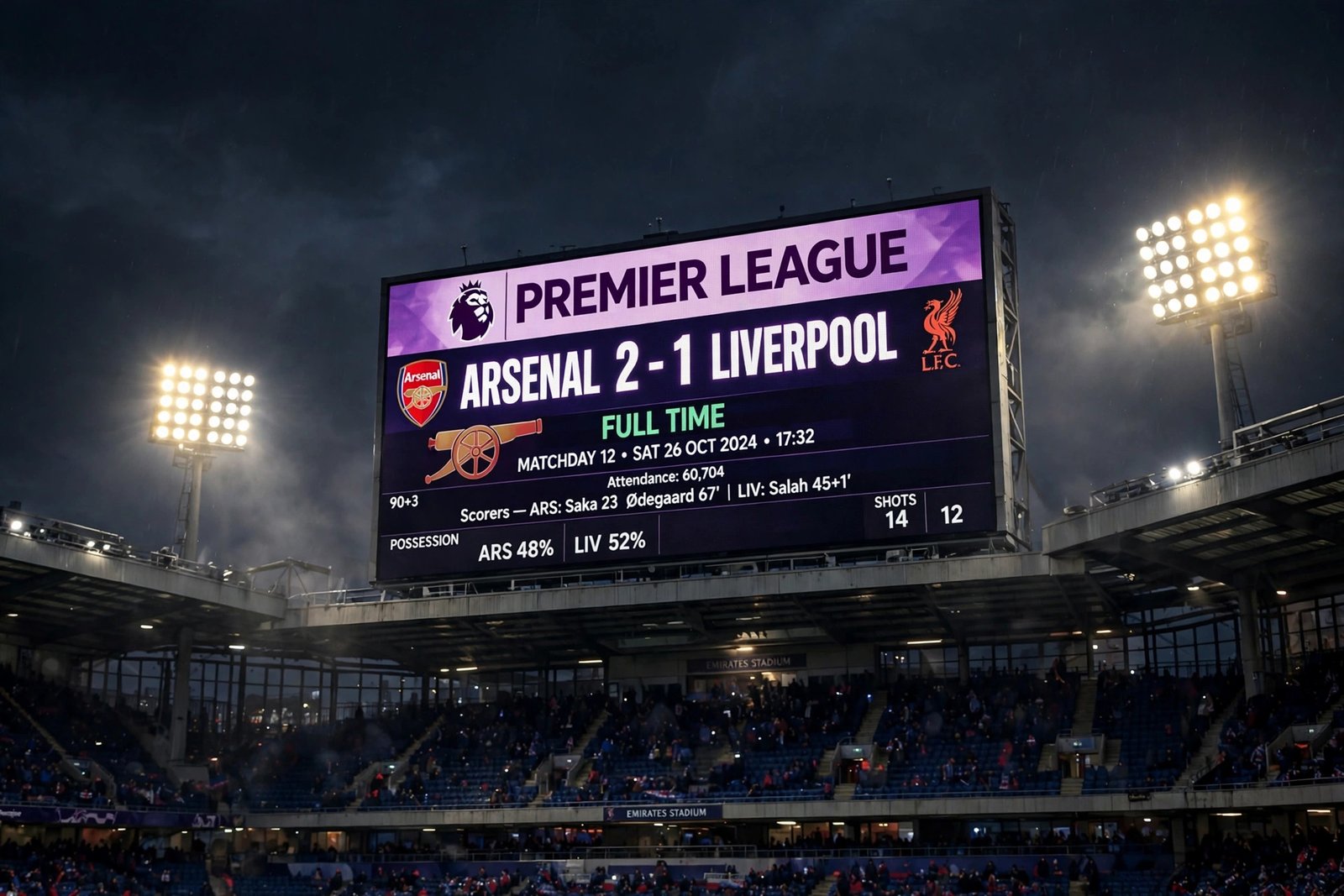
If you search for barclays premier league scores, you are usually looking for one simple thing: the latest results, as quickly and as accurately as possible. Who won, who lost, who scored, and what it means for the table. The phrase itself is a piece of football history. Barclays was the title sponsor of the Premier League from 2001 until 2016, so for a whole generation of fans the competition was simply the Barclays Premier League, and the habit of searching for its scores under that name has stuck around long after the sponsorship ended.
Today the competition is officially called the Premier League, but the scores work exactly the same way. This guide explains where to find reliable live scores, how to read a scoreline and a league table properly, what to watch for on a busy matchday, and how to avoid the confusion caused by delayed updates, wrong kick-off times and misleading headlines.
What “Barclays Premier League Scores” Means Today
When people use the term barclays premier league scores, they almost always mean Premier League scores in general. The Barclays era covered some of the most famous seasons in English football history, including unbeaten runs, dramatic final-day title races and the rise of clubs that had never before challenged at the top. Because that branding was everywhere for fifteen years, on television graphics, in newspapers and on match tickets, it became shorthand for the league itself.
That matters when you are searching. Some older articles, videos and databases still label results from 2001 to 2016 as Barclays Premier League results, while current results are labelled simply as Premier League results. They are the same competition, and the same record books. If you are looking up a result from a Barclays-era season, you will find it under the Premier League archive for that year. If you are looking for today’s scores, any major live scores service will have them under the Premier League heading.
Where to Find Barclays Premier League Scores Live
The most reliable place for live scores is the Premier League’s own website and app, which carry official live match centres with team news, line-ups, goalscorers and minute-by-minute updates. The BBC Sport website and app are another strong choice, particularly in the UK, with live text commentary, goal alerts and full-time reports for every match. Sky Sports also provides live scores, video highlights and post-match analysis, while services such as Flashscore, Sofascore and FotMob are popular for fast goal notifications and detailed match statistics.
Speed is not the only thing that matters. A good live scores source should also tell you when a goal is under review, when a match has been delayed, and when a result is confirmed rather than provisional. During a busy Saturday afternoon, when several matches kick off at the same time, a service that updates one match at a time can leave you a goal behind. Using two sources at once, for example the official app for confirmation and a dedicated scores app for speed, is a sensible habit for serious followers.

How to Read a Premier League Scoreline and Table
A scoreline looks simple, but it carries more information than just the final numbers. The order matters: the home team is always listed first, so a 2-1 result means the home side won by one goal. Goalscorers and the minute of each goal tell you how the match unfolded, whether a team led from early on, came from behind, or scored late to snatch a point. Extra details such as red cards, penalties and injury time help explain why a match finished the way it did.
The league table is where individual scores turn into a season story. Teams earn three points for a win and one for a draw. The table ranks teams by points, then by goal difference, then by goals scored. Early in the season the table moves wildly, because one win can lift a team several places. By the final weeks, the gaps between teams are usually clearer, and the battles for the title, for European qualification and for survival at the bottom become the focus. That is why a single weekend’s scores can feel so dramatic: they do not just change one team’s record, they change the picture for everyone around them.
It is also worth understanding the difference between a live table and a final table. A live table updates during matches, so a team can sit top at half-time and drop down by full-time. Headlines based on live tables can be misleading, so always check whether a table reflects completed matches or matches still in progress before drawing conclusions.
Why Scores Matter So Much to Supporters
For most fans, scores are not just numbers. They are the shared language of a supporter community. A result on a Saturday afternoon shapes conversations at work on Monday, dominates group chats for days, and becomes part of a club’s story for years. That is the same supporter culture celebrated in our guide to the Luton Town Outlaws, the emotional heartbeat of Luton Town FC, where matchday atmosphere, chants and loyalty matter just as much as the scoreline itself. Results give those rituals their stakes: a late winner turns a good atmosphere into an unforgettable one, while a heavy defeat tests exactly the kind of loyalty that supporter groups are built on.
Scores also matter beyond emotion. They decide prize money distribution, European qualification, relegation, managerial futures and transfer plans. A single goal on the final day can be worth promotion, survival or a place in continental competition, which is why the final round of fixtures is played simultaneously, so that no team gains an advantage from knowing another result in advance.
Following a Full Matchday: Fixtures, Kick-Off Times and Postponements
A Premier League matchday usually spreads fixtures across the weekend, with some matches on Friday evening, the bulk on Saturday and Sunday, and often one on Monday night. Kick-off times vary because of television scheduling, so always check the official fixture list rather than assuming a traditional Saturday afternoon start. Fixtures can also move at short notice for television, cup commitments, European matches or safety reasons.
Postponements happen too, most often because of severe weather, a waterlogged pitch, or a clash with another competition. When a match is postponed, it is rearranged for a later date, and the points are only decided then. That is one reason why teams sometimes appear to have played a different number of matches: a postponed fixture leaves a game in hand, and the table only settles once every team has caught up. If your team has a game in hand, its league position can look worse than it really is, because it still has a chance to earn points that its rivals have already banked.
Matchday Habits for Serious Followers
The best way to follow scores is to build a small matchday routine. Before kick-off, check the confirmed team news, because a late injury to a key player can change expectations completely. During the match, follow a live text service rather than relying on social media rumours, which often report goals before they are confirmed or confuse one match with another. After full-time, read a proper match report to understand how the result happened, not just what it was.
If you follow more than one team, or you play fantasy football, set up personalised alerts for the matches and players you care about. Goal alerts, team news notifications and full-time results will keep you informed without forcing you to watch every live feed at once. And if you are attending a match, remember that stadium announcements and the big screen are usually a few seconds behind the live action, so a cheer from another stand may be your first clue that a goal has gone in elsewhere.
Common Mistakes When Checking Premier League Scores
- Trusting an unconfirmed goal: Wait for the official confirmation, especially when a video assistant referee check is under way.
- Mixing up competitions: A team can play in the league, a domestic cup and Europe in the same week, so check which competition a scoreline belongs to.
- Reading a live table as final: Positions change during matches, so only trust a table once all matches in the round are complete.
- Ignoring games in hand: A team with a postponed fixture may look lower in the table than its true position.
- Assuming old branding means old data: Barclays-era results are part of the same Premier League record, not a separate competition.
Barclays Era Highlights Worth Knowing
Understanding the Barclays era helps you make sense of the records that still get quoted today. The sponsorship period covered the 2001-02 season through to 2015-16, and it included some of the league’s defining moments. Title races went to the final day more than once, underdogs broke into the top four, and the 2015-16 season ended with one of the most famous title wins in English football history. When commentators mention records from that period, they are talking about the same competition you watch today, just under its former sponsored name.
That continuity is also why historical scores still matter. Head-to-head records, all-time scorers and longest unbeaten runs all stretch across the Barclays era and beyond it. A search for barclays premier league scores might therefore lead you to an archive result from 2008 or to a live score from this weekend, and both are legitimate uses of the same phrase.

Frequently Asked Questions
Is the Barclays Premier League the same as the Premier League?
Yes. Barclays was the title sponsor between 2001 and 2016. The competition is now known simply as the Premier League, but it is the same league with a continuous history and record book.
Where can I check Premier League scores live for free?
The Premier League app, BBC Sport, Sky Sports and dedicated scores apps all offer free live scores, with the official app and BBC Sport among the most reliable for confirmed results.
Why do different sites show different scores for the same match?
Usually because one has updated faster than the other, or because a goal is still under review. Wait for the official confirmation and refresh, and the sites will agree.
What does a game in hand mean?
It means a team has played fewer matches than its rivals, usually because a fixture was postponed. Its league position may improve once that extra match is played.
Why are some fixtures played on Friday or Monday?
Television scheduling, cup ties and European fixtures all move matches away from the traditional Saturday afternoon slot. Always check the official fixture list for confirmed kick-off times.
Conclusion
Searching for barclays premier league scores is really about staying close to the competition, whether you mean a classic result from the Barclays era or the latest score from this weekend. Use an official source for confirmation, a fast scores app for alerts, and a proper match report for context, and you will rarely be caught out by a delayed update or a misleading headline. Scores are the simplest part of football, but they carry the whole season with them, from the first goal in August to the final whistle in May, and following them well is the easiest way to stay part of the conversation all season long.