
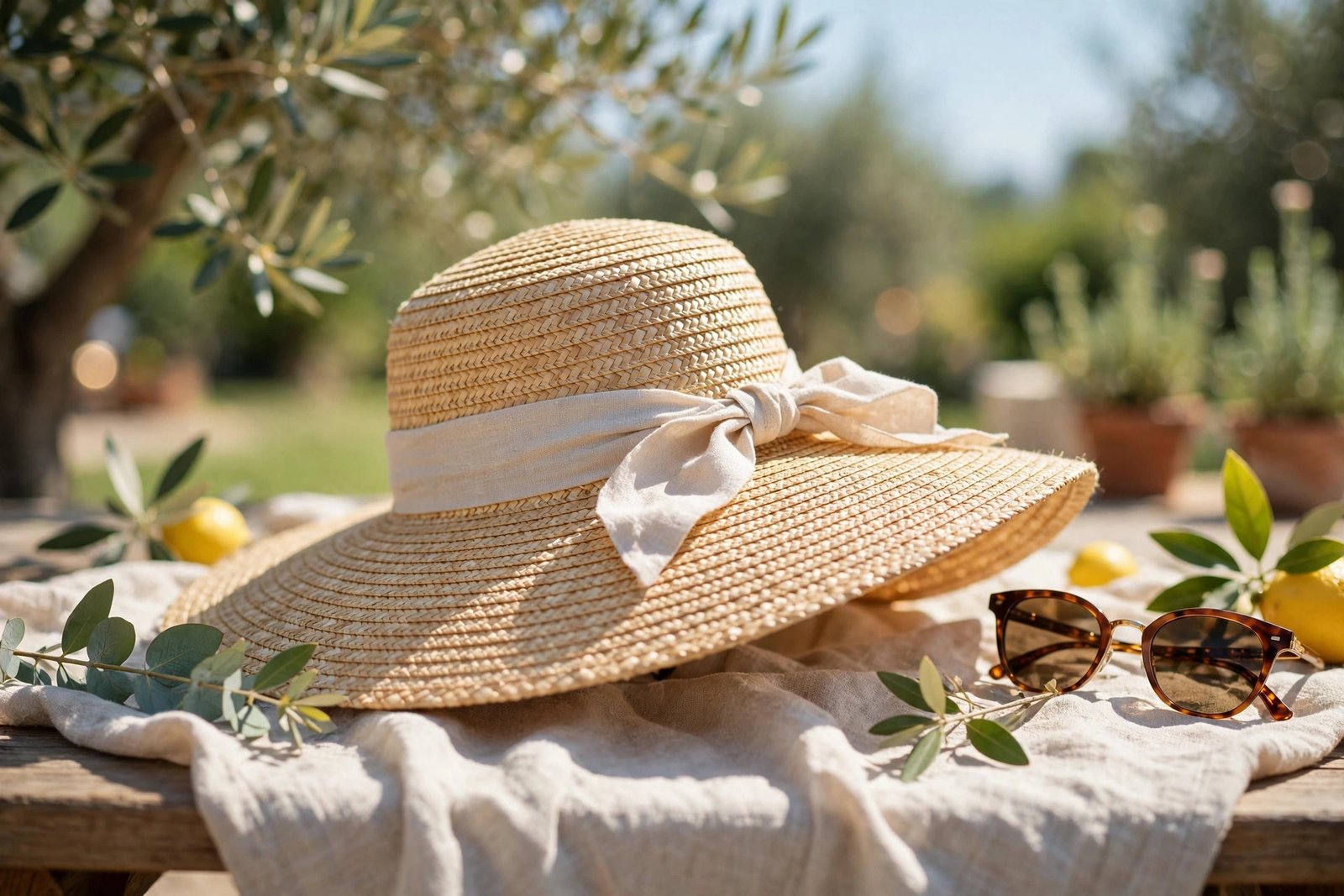
A good sun hat does two jobs at once. It protects your face, ears and neck from the sun, and it finishes an outfit in a way that sunglasses alone never quite manage. Yet most people buy sun hats on impulse, usually on holiday, and end up with something that blows off in the first breeze, squeezes their head, or sits unworn in a cupboard for the rest of the year. Choosing well takes only a little thought, and the difference between a hat you reach for every sunny day and one you forget is almost always in the fit, the brim and the material.
This guide covers the main types of sun hats, what sun protection ratings actually mean, how to pick a shape that suits your face, which materials work in real summer heat, and how to style and look after your hat so it lasts more than one season. Whether you want a beach hat, a walking hat or something smart enough for a summer wedding, the same principles apply.
Why a Sun Hat Matters
Sun protection is usually talked about in terms of sunscreen, but a hat protects in a way that lotion cannot. It shades the skin directly, so there is nothing to reapply and no missed patch on the tops of your ears or the back of your neck. The face is where sun damage shows first, with fine lines, uneven pigmentation and dryness building up over years of exposure, and a wide brim is one of the simplest ways to slow that down. A hat also keeps you cooler, because shade on your head means less direct heat, and it protects your eyes from glare, which is why a hat and sunglasses work so well together.
That does not mean a hat replaces sunscreen. The sun still reaches you from reflected surfaces such as sand, water and pale pavements, and the parts of your face that a brim does not cover still need protection. Think of a hat as the first layer of defence, not the only one. Worn with sunscreen and sunglasses, it gives you a level of everyday protection that is easy to maintain, because unlike a bottle of lotion it does not run out, and unlike a parasol it leaves both hands free.
The Main Types of Sun Hats
Wide-brim hats are the classic sun hat, with a brim of three inches or more all the way round. They give the most shade, covering the face, ears and neck, and they suit relaxed settings such as beaches, gardens and outdoor lunches. The trade-off is wind: a very wide brim catches the breeze, so look for a chin cord or an adjustable inner band if you plan to wear one on a coastal walk. Straw versions are light and breathable, while fabric versions pack down more easily.
Bucket hats have a shorter, downward-sloping brim and a soft, unstructured crown. They are the most practical everyday sun hat, because they fold into a bag, stay on in a breeze, and suit almost any casual outfit. Originally designed for fishing and hiking, they have become a fashion staple in their own right, and they work particularly well for walking, festivals and travel. The shade they give is less than a wide brim, but for most daily wear it is plenty.
Fedoras and panamas sit at the smarter end of the range. A fedora has a pinched crown and a medium brim, and it dresses up a linen shirt or a summer dress without looking like beachwear. A genuine panama is woven from toquilla straw and is remarkably light for its structure, which is why it has been a warm-weather classic for well over a century. Both suit occasions where you want sun protection without looking like you are on a hiking trail.
Baseball caps and visors are worth mentioning because they are what most people already own, but they have a real limitation: they shade the forehead and eyes while leaving the ears and neck exposed. A cap is fine for a run or a game, but for a long day in the sun it is not a substitute for a brimmed hat. A visor is even more limited, since it leaves the top of the head uncovered. If a cap is your usual choice, consider pairing it with sunscreen on the ears and neck, or switching to a bucket hat for days when you will be out for hours.
What UPF Really Means
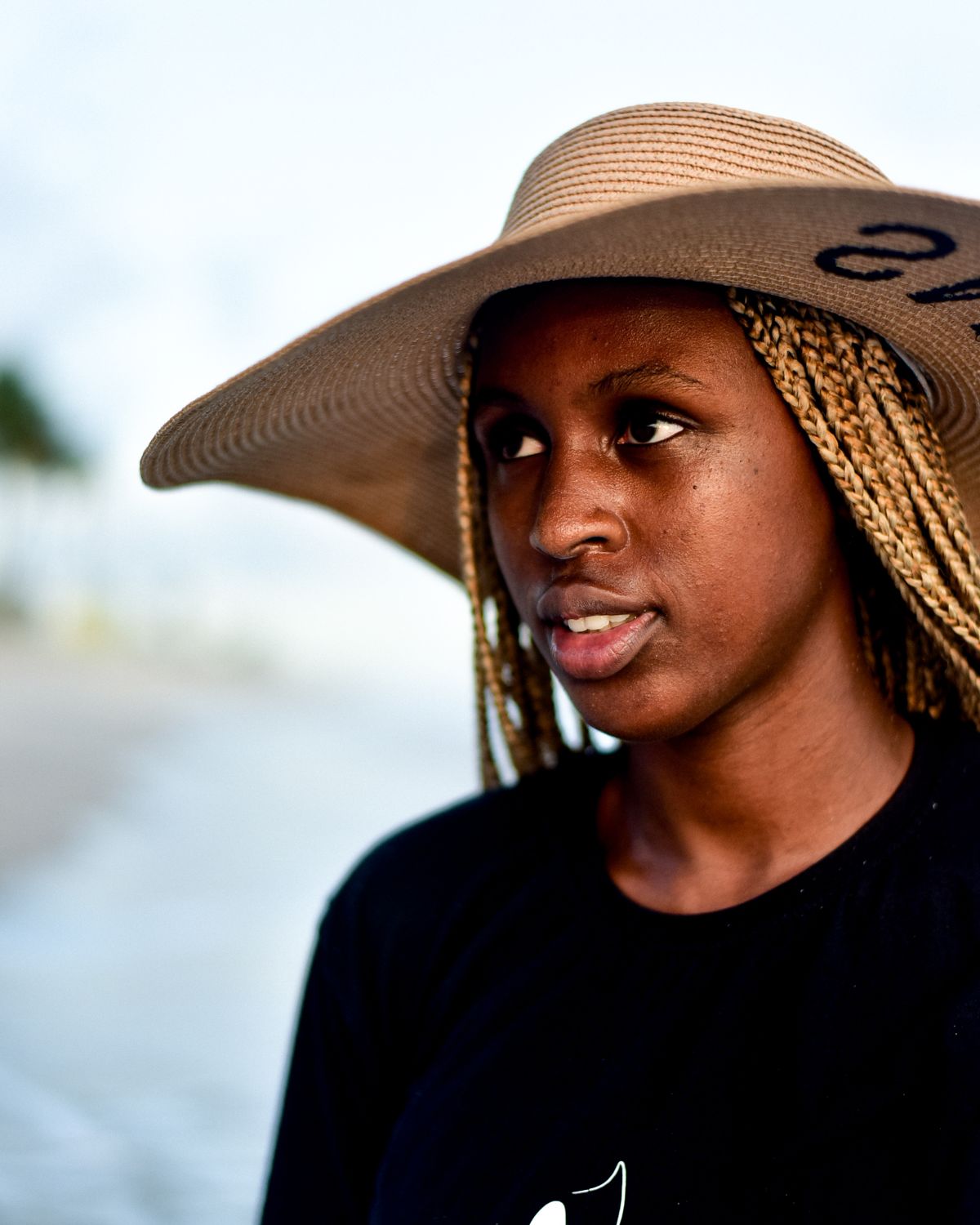
Some sun hats carry a UPF rating, which stands for ultraviolet protection factor. A UPF 50 hat blocks about ninety-eight percent of ultraviolet rays, while a UPF 30 hat blocks about ninety-seven percent. The rating measures the fabric itself, so it applies to the crown and brim material rather than to the shade the hat casts. A tightly woven fabric gives a higher rating than a loosely woven one, which is why a dense straw or a thick cotton canvas usually protects better than an open weave, even though the open weave feels cooler.
Do not let the number be the only thing you look at. A hat with a high UPF but a tiny brim still leaves your ears and neck in the sun, while a wide-brim hat in an ordinary fabric gives excellent practical protection simply through shade. The best combination is a decent weave plus a brim wide enough to shade your face, ears and the back of your neck. If you spend long hours outdoors, for example gardening or walking, a UPF-rated hat is a sensible choice. For everyday wear, brim size and fit matter more than a single digit on a label.
Choosing a Sun Hat for Your Face Shape
Face shape is a useful guide, not a rule, and the goal is balance rather than correction. For a round face, a hat with a slightly higher crown and a medium to wide brim adds length and structure. For a long face, a wider brim and a lower crown help to balance proportions. For a square face, softer shapes such as a floppy wide brim or a rounded bucket hat soften the angles. For an oval face, most styles work, so the choice comes down to personal taste and the occasion.
More important than face shape is proportion. A very large brim can overwhelm a petite frame, while a tiny hat can look lost on a larger build. Try hats on in person when you can, and look at yourself from the side as well as the front, because a hat is seen in profile as much as face on. The hat should sit comfortably above your eyebrows, not slide down over them, and it should feel secure when you move your head without needing to be jammed on tight.
Materials That Work in Summer Heat
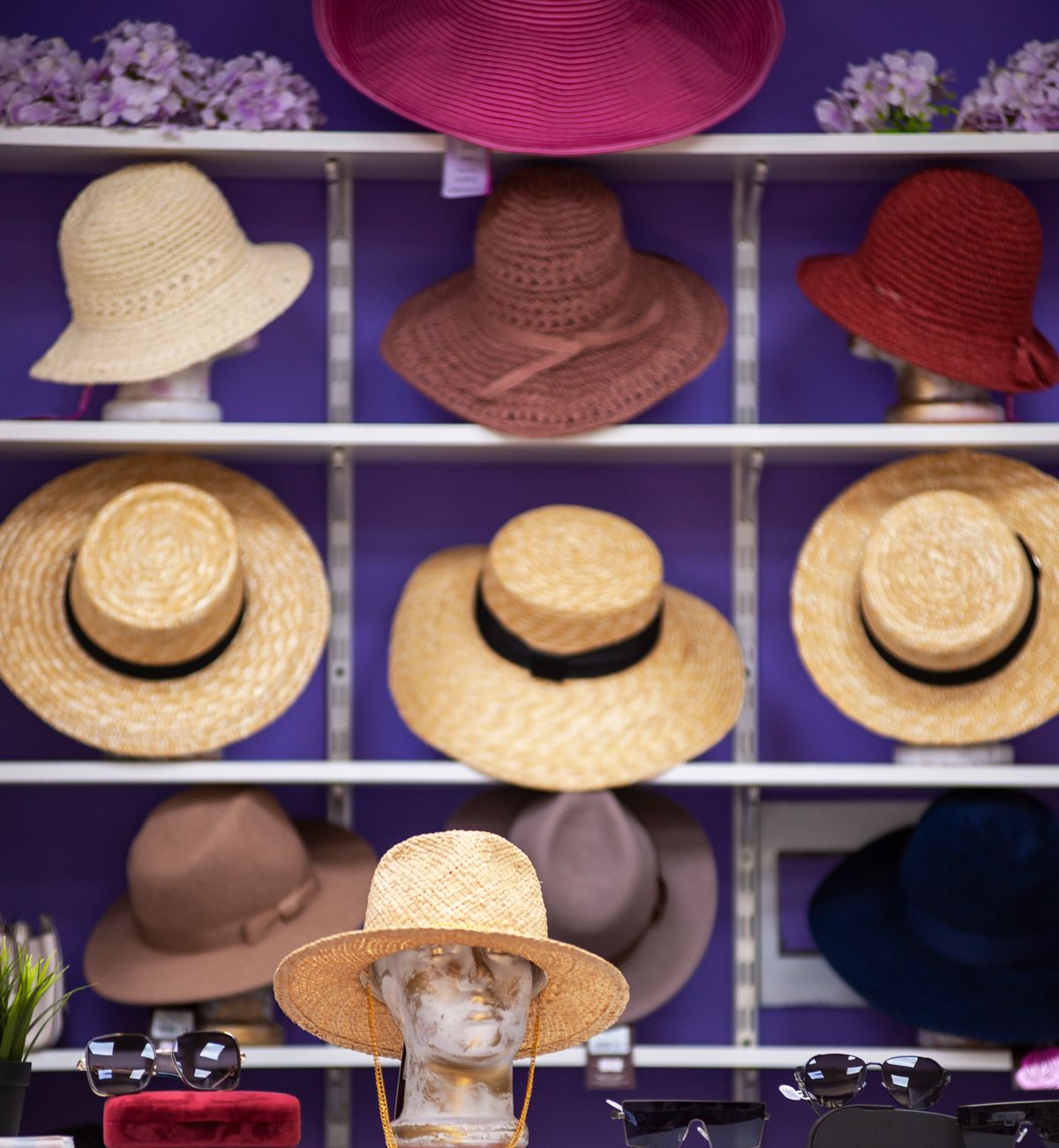
Straw is the traditional sun hat material for good reason: it is light, breathable and naturally stiff enough to hold a brim shape. Paper straw and seagrass are common in everyday hats and are easy to look after, while toquilla straw is finer and more expensive. The weakness of straw is water. A soaked straw hat can lose its shape, so it is not the best choice for a boat trip or a day when rain is likely.
Cotton and canvas hats are the workhorses of sun protection. They are washable, packable and durable, and they suit walking, gardening and travel. A cotton bucket hat can be folded into a pocket and shaken out again without damage, which is why it is the default choice for so many people. Linen is lighter and smarter, but it creases easily and offers less structure. For active use, look for hats with ventilation eyelets or mesh panels in the crown, which let heat escape and make a real difference on a hot day.
Styling a Sun Hat
A sun hat should look like part of your outfit, not an afterthought. The simplest approach is to match the tone of the hat to the occasion: natural straw and canvas for casual days, a darker felt or a crisp panama for smarter ones. A straw wide-brim hat works beautifully with a summer dress, linen trousers or a swimsuit and cover-up. A bucket hat pairs naturally with shorts, a t-shirt and trainers, and it is one of the few hats that looks equally at home at a festival and on a coastal path.
Colour matters too. Neutral tones such as natural straw, beige, navy and black are the most versatile, because they go with everything you already own. A bright or patterned hat can be a lovely statement piece, but it will only be worn when it matches the rest of the outfit, so it is usually better as a second hat rather than your first. If you wear glasses, check that the brim does not push your frames down your nose, and if you wear your hair up, make sure the crown has room for it.

Sun Hats and Hairstyles
Hats and hair have a complicated relationship, and the main problem is hat hair: the flattened, creased result of hours under a crown. Shorter styles cope best, because there is less hair to compress, and a neat cut makes the whole look tidier when the hat comes off. That is one reason why low-maintenance cuts are so popular in summer, and our guide to low taper fade hairstyles explains a style that sits neatly under a bucket hat or a cap without needing constant attention.
For longer hair, a low bun or a loose plait worn to one side works better than a high ponytail, which fights with the crown of the hat. A silk or satin lining inside a hat reduces friction and frizz, and a quick shake and a few minutes without the hat usually restores most of the volume. If you are heading somewhere where you will take the hat on and off all day, a style that can be refreshed quickly is worth more than a perfect one that collapses at the first breeze.
Summer Grooming Around Your Hat
A sun hat is part of a wider summer grooming routine, not a standalone accessory. Hair that is kept neat at the sides and neckline looks better under any hat, and a tidy cut also means less bulk trapped under the crown on hot days. Keeping your own grooming tools in good order matters here too, and our clipper guide covers how to choose and maintain clippers for exactly that kind of regular summer upkeep at home.
The same thinking applies to skin. A hat shades your face, but the skin underneath still needs care, especially after a day in heat and salt air. Rinse off sweat and sunscreen at the end of the day, moisturise as usual, and give your scalp some attention too, because a hat traps heat and moisture against it. Small habits like these are what turn a sun hat from a holiday purchase into a genuine part of your summer routine.
Caring for Your Sun Hat
Most sun hats fail through poor storage rather than wear. Never squash a structured hat into a bag for a long period, because the brim will remember the crease. Store hats upside down on their crown, or on a hook by the inner band, and keep them away from radiators and damp cupboards. A soft bucket hat is the exception: it can be folded and packed without harm, which is part of its appeal for travel.
Cleaning depends on the material. Cotton and canvas hats can usually be spot-cleaned with mild soap and water, or hand-washed and reshaped while damp. Straw hats should be brushed clean and wiped with a barely damp cloth, never soaked. Sweat stains on the inner band can be treated with a gentle soap, and a hat that has lost its shape can often be revived by steaming it lightly and reshaping it by hand while it is still warm. With basic care, a good sun hat should last several summers, which makes it one of the better-value pieces in a summer wardrobe.
Frequently Asked Questions
What brim width gives the best sun protection?
A brim of three inches or more shades the face, ears and neck effectively. Wider is better for protection, but make sure the hat still feels stable in a breeze, and look for a chin cord if you will be near the coast.
Can I wear a sun hat with sunglasses?
Yes, and you should. The hat shades your face while the sunglasses protect your eyes from glare and reflected light. Check that the brim does not push your frames out of position when you try the combination on.
Are expensive sun hats worth it?
Sometimes. A well-made panama or a good-quality felt hat will hold its shape and last for years, which is worth paying for if you wear hats often. For a first sun hat, though, a well-fitting cotton or straw hat at an everyday price is a perfectly sensible choice.
How do I stop my sun hat blowing away?
Choose a hat with a chin cord or an adjustable inner band, and make sure the fit is snug without being tight. A hat that is slightly too large is the one most likely to end up in the sea.
Conclusion
The right sun hat is the one you actually wear. Start with the job it needs to do, pick a brim wide enough to shade your face and neck, choose a material that suits your summer, and make sure the fit is comfortable enough to forget about. Get those basics right and the style takes care of itself, whether you prefer a wide-brim straw hat, a practical bucket hat or a smart panama. A good hat protects you, cools you down and finishes an outfit, and that is a lot to ask of one accessory, which is exactly why it is worth choosing carefully.