
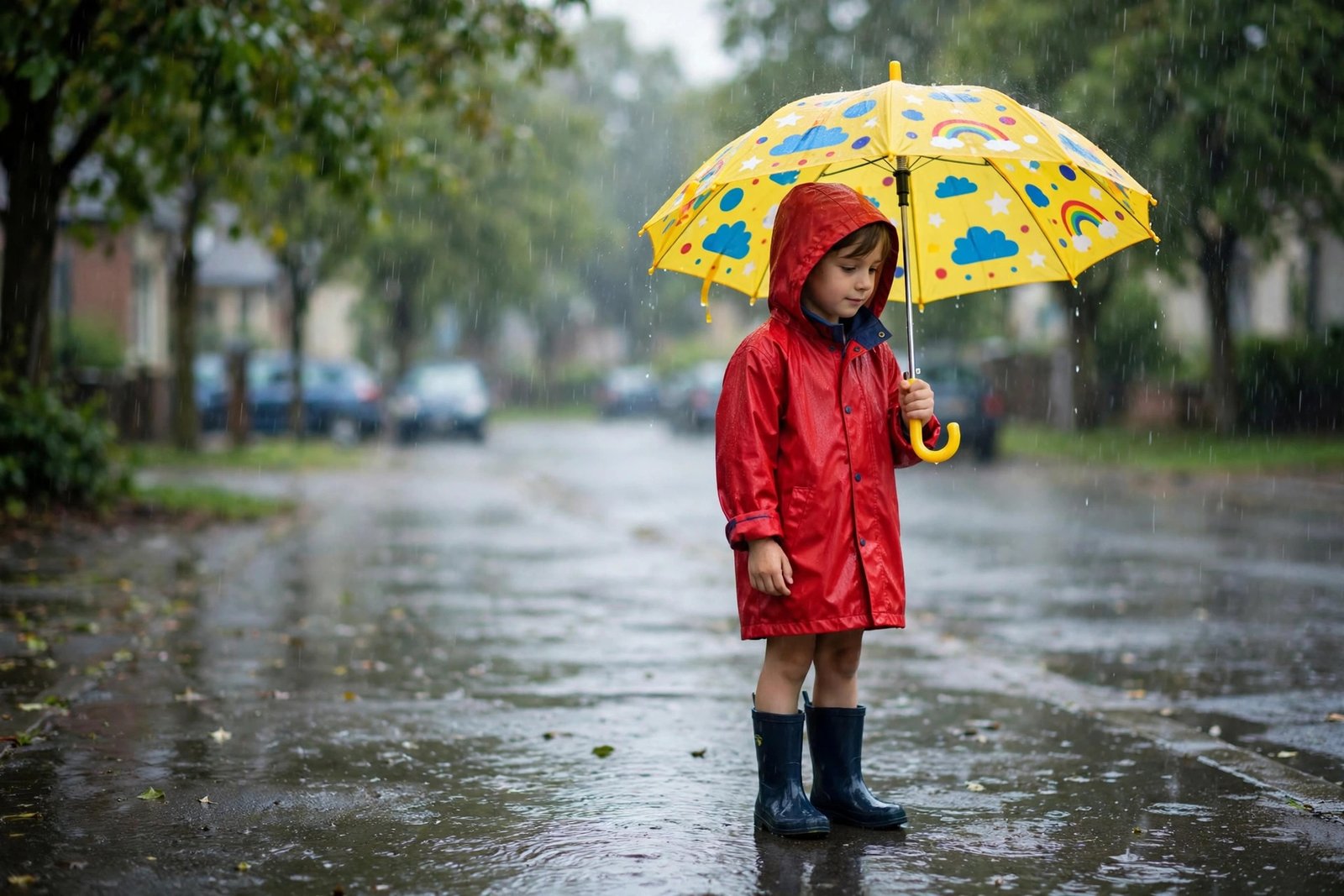
A children’s umbrella is a small purchase that can make a big difference to a rainy day. For a child, an umbrella is not just rain protection: it is a chance to feel grown up, to choose a favourite colour or character, and to turn a wet walk to school into something a little more fun. For a parent, it is a way to keep a child drier, warmer and happier on the school run, on days out and on holidays. Yet children’s umbrellas vary enormously in quality, and a flimsy one that turns inside out at the first gust of wind will put a child off umbrellas altogether.
This guide explains how to choose a kids’ umbrella that is safe, sturdy and the right size, what the different styles offer, how to match an umbrella to your child’s age, and how to teach children to use one safely and look after it. Whether you need an umbrella for a toddler’s first rainy walks or for an older child heading to school alone, the same principles apply: safety first, a size your child can actually handle, and a design they will want to use.
Why Children’s Umbrellas Are Different
Children’s umbrellas are not simply smaller versions of adult umbrellas. They are designed around smaller hands, shorter arms, less strength and a different sense of awareness. A child cannot easily wrestle with a stiff opening mechanism or hold a heavy umbrella steady in a strong wind, and a child is less likely to notice when an umbrella is poking towards another person’s face. Good kids’ umbrellas take all of this into account, with lighter frames, easier mechanisms, rounded tips and sizes that match a child’s height and reach.
There is also the question of enthusiasm. An umbrella that a child loves, because of its colour, its pattern or the character on it, is an umbrella that will actually be carried and used. An umbrella chosen purely for practicality, in a colour a child dislikes, is likely to be left at home or forgotten at school. Letting a child choose between a few sensible options is usually the best approach: you control the safety and quality, and your child gets the fun of choosing. That sense of ownership also makes a child more likely to look after the umbrella rather than losing it on the first outing.
What Makes a Good Children’s Umbrella
Safety comes first, and the most important features are easy to check. Look for rounded, blunt tips on the ribs, rather than sharp points, and a handle that is comfortable to grip and not so large that a small hand cannot hold it securely. The opening mechanism should be smooth and manageable for your child: some children’s umbrellas open automatically at the press of a button, which is convenient but needs care, because a spring-loaded canopy can open suddenly near a face. Others open manually, which is slower but gives a child more control. Whichever type you choose, show your child how to open it away from their face and from other people, and practise at home before the first rainy day.
Strength matters almost as much as safety, because a children’s umbrella that collapses in a breeze is worse than no umbrella at all. Look for a frame that feels sturdy without being heavy, ribs that flex rather than snap, and a canopy made from a fabric that sheds water rather than soaking it up. A vented canopy, with a small flap that lets wind pass through, can help an umbrella cope with gusts without turning inside out. It is also worth checking the quality of the joints and the shaft: wobbling or rattling when the umbrella is new is a sign that it will not survive many school terms.
Choosing the Right Size and Style
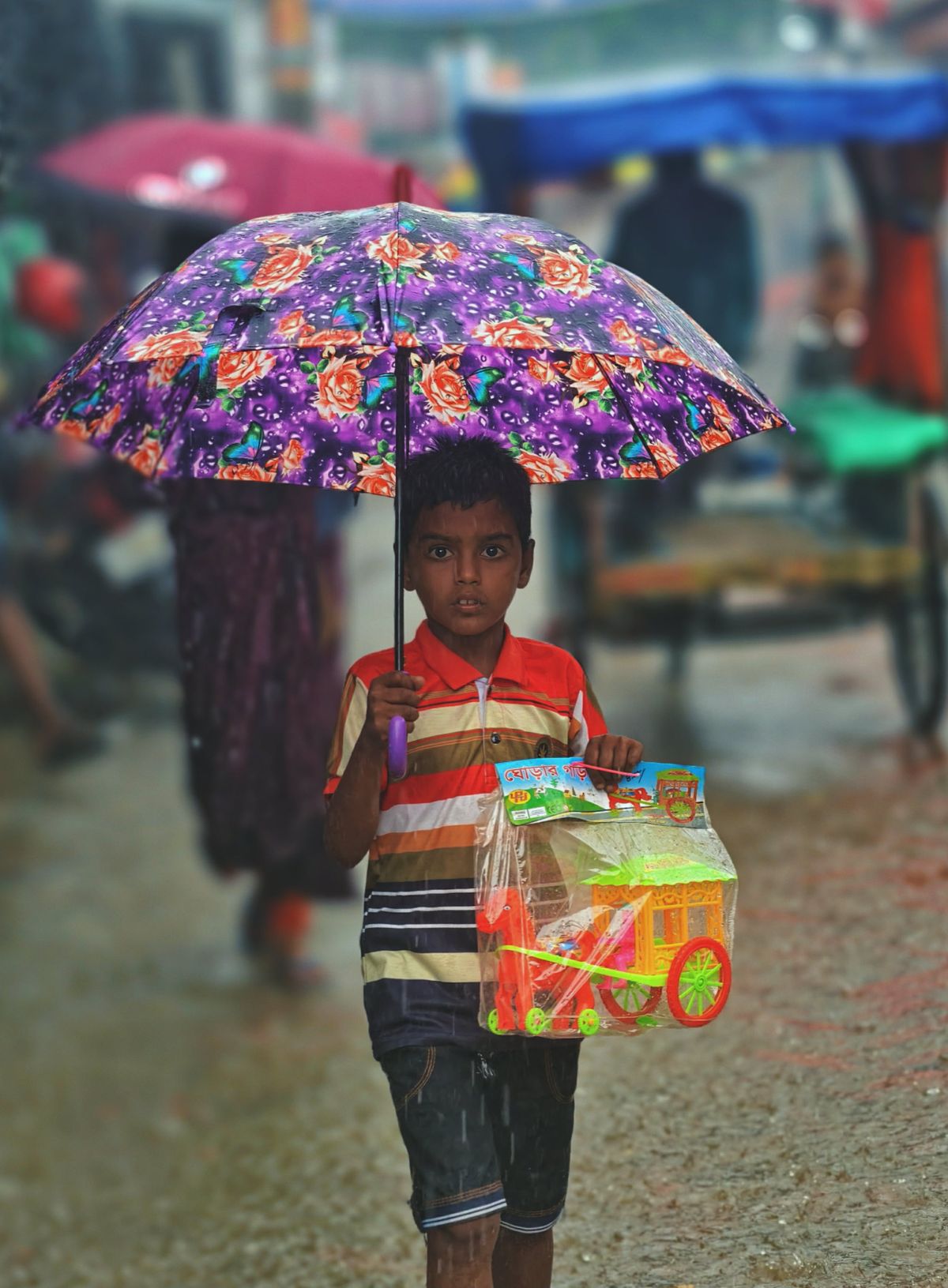
Size is where many children’s umbrellas go wrong. An umbrella that is too large will be heavy, awkward and hard to control, especially in wind, while one that is too small will leave shoulders and a school bag soaked. As a rough guide, the canopy should cover your child’s head and shoulders comfortably without extending so far that they cannot see where they are going or hold it upright. For younger children, a smaller canopy is almost always better, even if it means a little rain on the edges, because control and comfort matter more than total coverage.
Stick umbrellas are the classic style, with a straight shaft and a curved handle, and they are easy for children to understand and use. Folding umbrellas pack down small enough for a school bag or a coat pocket, which makes them practical for older children, but their mechanisms can be fiddly for small hands, and they are often less sturdy in wind. Clear dome umbrellas, with a transparent canopy that curves down around the head, are popular with younger children because they can see out in all directions, including upwards, and they offer excellent coverage. They are also easy for adults to spot in a crowd, which is a small but genuine safety benefit on a busy school run.
Choosing by Age
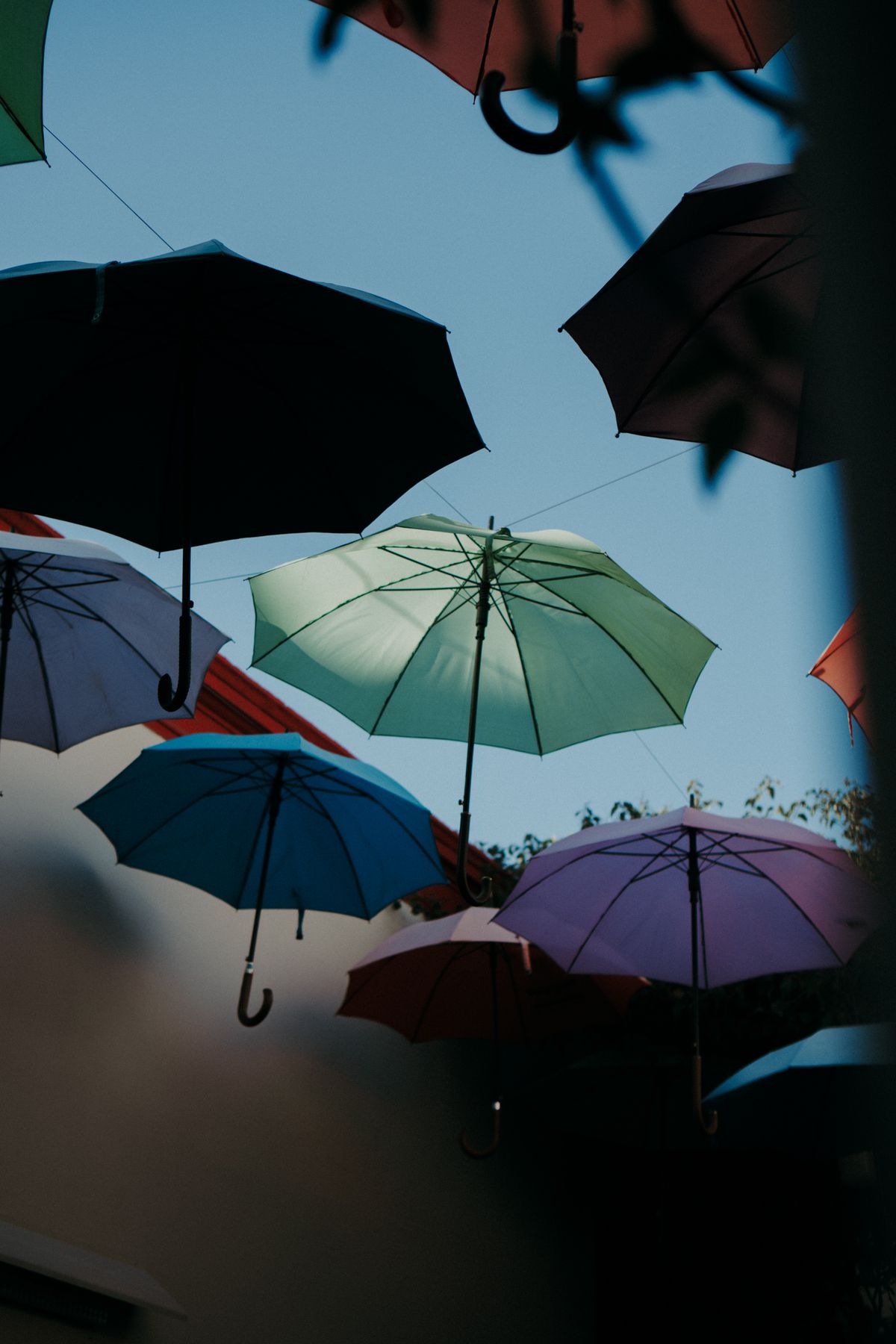
For toddlers and preschool children, the priority is simplicity and lightness. A small stick umbrella with a chunky, easy-grip handle and a simple manual opening mechanism is usually the best choice. At this age, an umbrella is as much a toy as a tool, so expect it to be opened indoors, twirled around and possibly left behind. Choose something sturdy enough to survive that treatment, but do not spend a fortune on an umbrella that may be lost within a term. Supervision matters too: very young children should use an umbrella with an adult nearby, both for safety and because they will need help when the wind catches it.
For children at primary school, an umbrella becomes a genuinely practical item for the walk to school and for playtime. A slightly larger canopy, a comfortable handle and a design your child likes will all help. This is also the age to teach the habits that make umbrella use safe and polite: holding it up rather than at eye level, watching out for other people, and closing it before going indoors. For older children heading to secondary school, a compact folding umbrella that fits in a bag is often the most practical choice, because a full-size stick umbrella is one more thing to carry, and therefore one more thing to lose. Let older children choose a plainer, more grown-up design if they prefer, because an umbrella they feel embarrassed by is an umbrella that will stay in a locker.
The School Run and Everyday Use
The school run is where most children’s umbrellas earn their keep, and it brings its own challenges. Rain often comes with wind, pavements are crowded, and children are carrying bags, lunchboxes and sometimes a younger sibling’s hand. An umbrella for the school run should be easy to open one-handed, light enough to carry alongside a bag, and quick to shake off and fold away at the school gate. A wrist strap or a loop is a useful feature, because it lets a child hang the umbrella from a wrist while opening a gate or a door, rather than dropping it in a puddle.
It is also worth thinking about visibility. Bright colours, reflective details and a clear dome canopy all help drivers and other pedestrians see a child in poor light and heavy rain. A dark umbrella on a dark, wet morning is harder to spot, and while fashion matters to older children, a compromise is usually possible: a favourite colour with a reflective trim, or a bright umbrella that still looks acceptable to its owner. Pairing an umbrella with a hooded coat gives a child a backup when the rain is too heavy or the wind too strong for an umbrella alone, and it means a failed umbrella does not turn into a soaked child.
Umbrellas for Days Out and Matchdays
Days out bring a different set of demands. A family trip to a theme park, a zoo or a football match can involve hours outdoors, with rain arriving partway through the day, and a children’s umbrella needs to cope with being carried, opened and closed repeatedly. A sturdy stick umbrella is often better for days out than a folding one, because it is quicker to open when a shower starts and less likely to jam after being stuffed into a bag. Pack a small towel or a plastic bag as well, so a wet umbrella does not soak everything else in the bag on the way home.
Sporting days out deserve a mention, because rain and sport go together in the UK, and children at matches need the same protection as adults. Checking the fixture and the forecast before you leave helps you pack the right kit, and following the sport itself is part of the fun of the day. Our guide to Barclays Premier League scores explains how to follow live results and tables, and the same habit of checking before you travel applies to any family day out: know when things start, know what the weather is likely to do, and pack accordingly. An umbrella, a waterproof coat and a little planning turn a wet matchday into an adventure rather than a washout.
Teaching Kids to Use an Umbrella Safely
Teaching a child to use an umbrella is mostly about awareness of other people. The main rules are simple: open the umbrella away from faces, hold it high enough that the ribs are above other people’s eye level, watch where you are walking, and close it before going indoors or getting into a car. Children also need to know what to do when the wind catches an umbrella. The instinct is to grip harder and fight it, but the safer response is to lower the umbrella slightly, turn into the wind, or simply close it and put a hood up. Practising in the garden on a breezy day, without any pressure, teaches this far better than a lecture on a wet pavement.
It is also important to teach children that an umbrella is not a toy sword, a walking stick or a spinning top, however tempting those uses may be. The ribs and tips can hurt, and an umbrella waved around in a crowd is a hazard to everyone nearby. Setting clear, simple rules from the start, and explaining the reason behind each one, works better than constant correction. When a child understands that the rules exist to keep other people safe, not just to spoil the fun, they are much more likely to follow them without being reminded every time.
Looking After a Children’s Umbrella
Children’s umbrellas last longer with a little care, and teaching that care is part of the point. After use, an umbrella should be opened up to dry, rather than left closed and damp in a bag, where it can develop a musty smell and a stiff mechanism. Shake off excess water before going indoors, and wipe the handle clean occasionally, because sticky hands and muddy handles go together. Check the ribs and joints every so often, and retire an umbrella with a broken rib or a bent shaft, because a damaged umbrella is both less effective and less safe.
Labelling an umbrella with your child’s name is a small step that saves a surprising number of lost umbrellas, particularly at school, where a rack full of similar umbrellas can be confusing. A distinctive colour, a tag or a small charm on the handle helps a child pick out their own umbrella quickly. It is also worth having a simple rule about where the umbrella lives at home, such as by the front door or in a hallway stand, so it is easy to grab on the way out and easy to put back on the way in. Habits like these, learned young, are what turn a child who loses umbrellas into a teenager who does not.
Common Mistakes When Buying Kids’ Umbrellas
- Buying too big: A canopy your child cannot control in wind is worse than a smaller one they can handle.
- Choosing looks over safety: Check for rounded tips, a comfortable handle and a mechanism your child can manage.
- Ignoring wind resistance: A vented canopy and a sturdy frame cope far better with gusts.
- Forgetting visibility: Bright colours and reflective details help drivers see a child in rain and poor light.
- Expecting a toddler’s umbrella to last years: Buy sturdy but sensibly, and accept that younger children lose things.
- Leaving it wet in a bag: Dry an umbrella open after use, or it will smell, stiffen and fail sooner.
Frequently Asked Questions
What age can a child use an umbrella?
Most children can enjoy an umbrella from toddler age with adult supervision, and can manage one independently from around school age. The key is matching the size, weight and mechanism to the child’s strength and coordination, rather than following a strict age rule.
Are automatic-opening children’s umbrellas safe?
They can be, provided a child is taught to open them away from their face and from other people. For very young children, a manual umbrella gives more control and is often the safer choice.
What is the best type of umbrella for a child?
For younger children, a small stick umbrella or a clear dome umbrella usually works best. For older children, a compact folding umbrella that fits in a school bag is often more practical.
How do I stop my child losing their umbrella?
Label it with their name, choose a distinctive colour, and give it a fixed home by the front door. A wrist strap also helps, because a child can hang the umbrella from a wrist instead of setting it down and forgetting it.
Should a child use an umbrella in strong wind?
In strong wind, a hood and a waterproof coat are safer than an umbrella. Teach children to close the umbrella and put their hood up when gusts make it hard to control, rather than fighting the wind.
Conclusion
The right children’s umbrella is one that a child can open safely, hold comfortably and actually wants to carry. Start with safety, choose a size your child can control, pick a style that suits their age and their daily routine, and let them have a say in the colour or design. Teach the simple habits of safe use, dry the umbrella properly after rain, and give it a home by the door. Get those basics right, and a kids’ umbrella becomes more than just rain protection: it becomes a small piece of independence, a splash of colour on a grey day, and one less reason for a rainy walk to end in a grumble.