

When people talk about golf, they usually talk about clubs. Yet ask any regular golfer what makes a round comfortable, organised and enjoyable, and the answer will almost always involve golf accessories. The bag that carries everything, the glove that keeps your grip steady, the balls and tees you reach for on every hole, the shoes that keep you steady on wet grass: these are the items that quietly shape your game. Good accessories do not replace practice, but they remove distractions, and on a golf course distractions are often what cost you shots.
This guide covers the golf accessories that matter most, from bags and gloves to rangefinders and training aids. It explains what each item does, how to choose one that suits your game and your budget, what to look for when you are starting out, and how to look after your gear so it lasts. Whether you play every weekend or you are only just getting into the game, the same principles apply: buy for the golf you actually play, favour comfort and durability over gimmicks, and build your kit up gradually rather than buying everything at once.
Why Golf Accessories Matter So Much
Golf is a game of routine. You walk a long way, you repeat the same movements many times, and you make a lot of small decisions between shots. Accessories support that routine. A well-organised bag means you are not hunting for a tee or a ball marker while your playing partners wait. A glove that fits properly means you can grip the club with confidence without squeezing too hard. Waterproofs that actually keep you dry mean a shower does not ruin your round or your mood. None of these things will turn a beginner into a scratch golfer, but each one removes a small obstacle, and small obstacles add up over a full round.
Accessories also matter because golf is played outdoors, in changing weather, over uneven ground, and for several hours at a time. That is a demanding environment for kit. Items that are fine for a short walk may not cope with a full round in wind and rain. Thinking about your accessories as a system, rather than as a collection of separate purchases, helps you avoid the common mistake of owning several versions of the same thing while missing something you genuinely need.
Choosing the Right Golf Bag
The golf bag is the foundation of your kit, because everything else lives in it. The first choice is between a carry bag and a trolley bag. A carry bag is lighter, with comfortable straps and legs that fold out when you set it down, and it suits golfers who like to walk the course. A trolley bag is larger and heavier, with more pockets and space, and it is designed to sit on a trolley or a cart rather than to be carried. There is no right answer here, only the answer that matches how you usually get around the course.
Look for a bag with enough dividers to keep your clubs from clashing together, pockets you can actually reach while the bag is on your shoulder or trolley, and a waterproof pocket for valuables such as a phone, keys and a wallet. A drinks pocket is more useful than it sounds, because staying hydrated matters over a long round. Check the weight of the bag before you buy it, ideally with a few clubs in it, because a bag that feels light in the shop can feel very different by the back nine. Colour and style are personal, but a bag in a colour you like is a bag you will enjoy carrying, and that counts for something over a long season.

Gloves, Balls and Tees: The Small Items That Matter
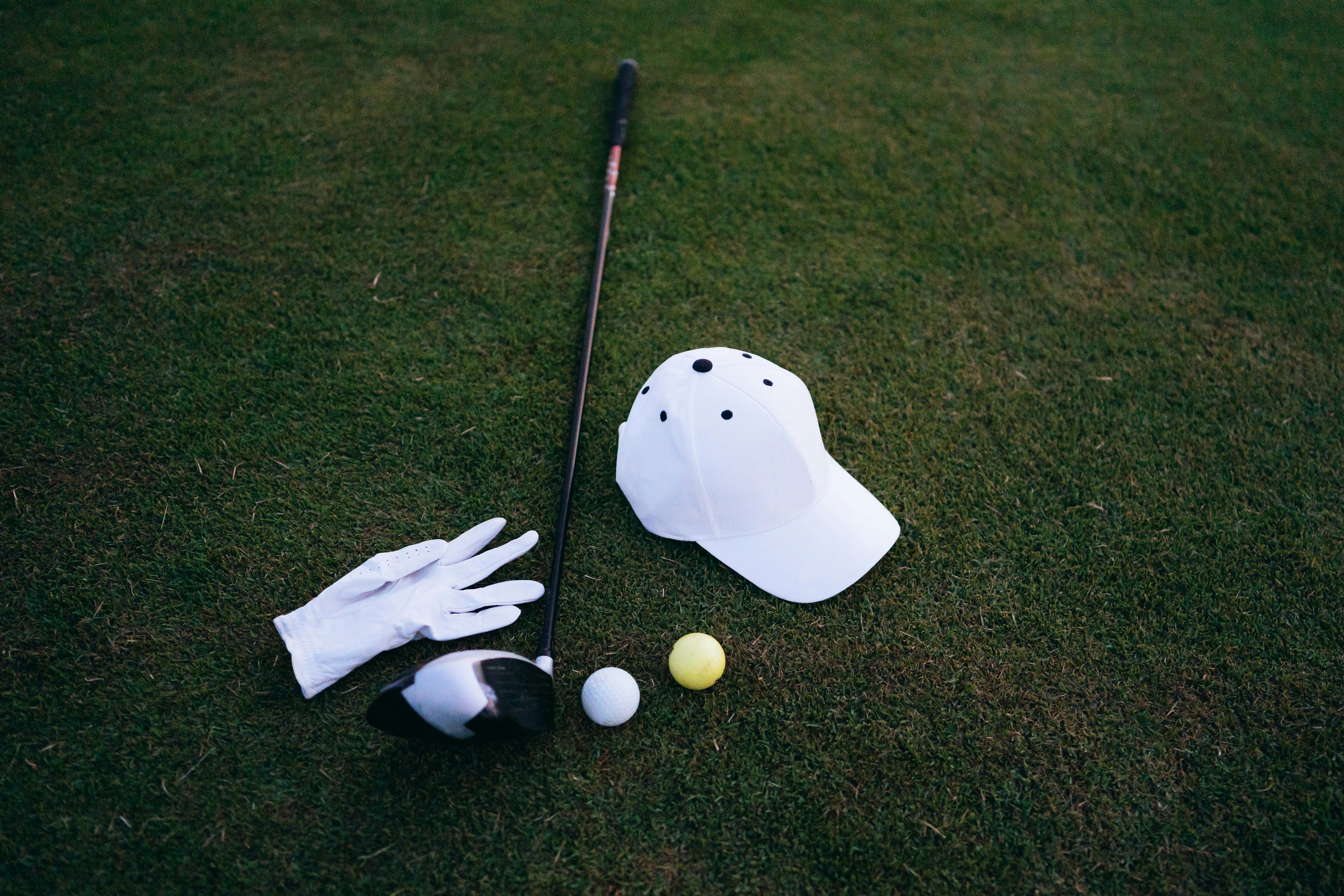
A golf glove is one of the cheapest accessories you can buy and one of the most important. It improves your grip, especially in damp conditions or on a warm day when your hands perspire, and it reduces the risk of the club twisting in your hands during the swing. Most right-handed golfers wear a glove on the left hand, and most left-handed golfers wear one on the right. The fit should be snug, like a second skin, without being tight enough to restrict movement. A glove that bunches at the palm or stretches loose after a few rounds is not doing its job, and it is worth replacing gloves regularly rather than clinging to a worn-out favourite.
Golf balls come in a bewildering range, but for most club golfers the differences are smaller than the marketing suggests. Beginners and higher-handicap players generally benefit from a softer, more forgiving ball, while lower-handicap players may prefer a ball that gives them more control around the greens. The practical advice is simple: pick one type of ball, stick with it for a while, and learn how it behaves, rather than switching to a different ball every round. Tees, meanwhile, are worth a little thought too. Wooden tees are traditional and inexpensive, plastic tees last longer, and longer tees suit drivers while shorter tees suit irons and hybrids. Ball markers, pitch-mark repairers and a towel for cleaning clubs are small items that cost very little and make a real difference to the pace and tidiness of your round.
Rangefinders and Distance Devices
Knowing how far you have to the flag, to a hazard or to the front of the green helps you choose the right club, and that is why distance devices have become so popular. Laser rangefinders let you point at a target and get a reading, while GPS watches and handheld devices show distances to the front, middle and back of the green, and sometimes to hazards as well. Both approaches work, and the choice usually comes down to personal preference: some golfers like the precision of aiming a laser, while others prefer glancing at a wrist display without breaking their rhythm.
Before buying, check the rules that apply to the competitions you play in, because some features, such as slope adjustment, are not allowed in certain events unless the feature can be switched off. Battery life matters too, especially if you play regularly, and a device that is simple to use in rain and bright sunlight is worth more than one packed with features you never open. A distance device should speed up your decisions, not slow them down, so if you find yourself checking it repeatedly before every shot, it may be working against you rather than for you.
Shoes, Clothing and Weather Gear
Golf shoes are accessories in the truest sense, because they affect both comfort and performance. Spiked shoes give grip on wet or hilly ground, while spikeless shoes are lighter and more comfortable for walking, and can be worn to and from the course. Whichever style you choose, the shoes should be waterproof or at least water-resistant, because morning dew alone is enough to soak through ordinary trainers, and wet feet will spoil a round faster than almost anything else. Try shoes on with the socks you actually wear for golf, and walk around in them properly before committing.
Clothing for golf should allow a full, free swing, which means avoiding anything tight across the shoulders or restrictive around the waist. Layers work best, because a cool morning often turns into a warm afternoon. A lightweight waterproof jacket and waterproof trousers are essential in the UK, where a round can start in sunshine and end in a downpour, and an umbrella designed for golf, with a large canopy and a sturdy shaft, is worth having in the bag even on a promising-looking day. A cap or hat and sunscreen belong in the same category: practical protection that lets you concentrate on your game rather than on the weather.
Training Aids and Practice Accessories
Training aids promise to fix your swing, your putting or your alignment, and some of them genuinely help, provided you use them with a clear purpose. Alignment sticks are among the simplest and most useful: they help you aim correctly on the practice ground, and they cost very little. A putting mat at home can help you practise your stroke through the winter, when getting to the course is harder, and a practice net in the garden can be useful if you have the space and a safe setup. The key is to choose one aid, understand what it is teaching you, and use it regularly for a few weeks, rather than collecting several aids and using each one once.
It is also worth being honest about what training aids cannot do. They cannot replace a lesson with a qualified coach, and they cannot fix a fault you have not correctly identified. If you are struggling with a particular part of your game, a lesson will usually give you more value than a new gadget, because a coach can see what you are doing and explain the change in terms that make sense for your swing. Training aids work best as a way to reinforce what you have already learned, turning a lesson into a habit through repetition.
Following Golf Like Other Sports
Part of the pleasure of golf is following the professional game, and that habit is shared across all sports. Just as football fans keep up with results week after week, golf fans follow tournaments, leaderboards and player form, and a good routine for checking scores and fixtures makes the sport more enjoyable. Our guide to Barclays Premier League scores explains how to follow live results and tables with confidence, and the same principles apply to golf: use a reliable source, check whether a leaderboard is live or final, and be wary of unconfirmed updates on social media. Following the sport well deepens your appreciation of it, whether you are watching a major championship or keeping an eye on your own club competitions.
Golf accessories can also make following the game easier. A scorecard holder keeps your card dry and tidy, a pencil that actually works saves fumbling at the first tee, and a small notebook or an app for recording your scores helps you track your progress over a season. Many golfers find that keeping simple records, such as how many fairways they hit or how many putts they take, reveals patterns that a single round never would. That kind of steady record-keeping is unglamorous, but it is one of the most reliable ways to improve.
Building Your Kit as a Beginner
If you are new to golf, it is tempting to buy everything at once, but a gradual approach is almost always better. Start with the essentials: a bag, a glove, balls, tees, a towel, a pitch-mark repairer and a ball marker. Play several rounds with that kit, and notice what you actually miss. Perhaps you need waterproofs, or a rangefinder, or better shoes. Buying in response to real experience means every purchase solves a problem you have felt, rather than one you imagined in a shop.
Borrowing or buying second-hand is also a sensible route for beginners, particularly for larger items such as bags and trolleys. Golfers upgrade their kit regularly, so good-quality used accessories are widely available, and trying something second-hand first tells you whether it suits you before you commit to a new version. The same logic applies to training aids: try a simple, inexpensive aid first, and only invest in something more specialised once you know you will use it often enough to justify it.
Looking After Your Golf Accessories
Golf accessories last much longer with a little care, and the most important habit is the simplest: clean your gear after a round. Wipe down your clubs, empty your bag of old scorecards and broken tees, and let wet items dry properly before storing them. A glove left damp in a bag will stiffen and smell, waterproofs stored wet will lose their effectiveness, and shoes left muddy will wear out faster. A few minutes of care after each round saves you from a bag full of tired, musty kit at the start of the next season.
Storage matters too. Keep your bag somewhere dry and out of direct sunlight, rather than in a car boot for weeks at a time, where heat and damp can damage grips, gloves and waterproof coatings. Check zips and straps occasionally, because a broken strap on the first tee is an avoidable annoyance. At the start of each season, go through your bag properly, replace worn gloves and tired towels, check your stock of balls and tees, and make sure your waterproofs still do their job. A seasonal tidy-up is also a good moment to notice what you no longer use, and to pass it on rather than carrying it around for another year.
Common Mistakes When Buying Golf Accessories
- Buying everything at once: Start with the essentials and add items as you discover you need them.
- Choosing style over comfort: Shoes, gloves and bags must feel right over a full round, not just in the shop.
- Ignoring the weather: In the UK, waterproofs and an umbrella are essentials, not optional extras.
- Switching balls constantly: Stick with one ball long enough to learn how it behaves.
- Overcomplicating distance devices: Pick a device you can use quickly, in any weather, without slowing your round.
- Neglecting basic care: Cleaning and drying your kit after a round extends its life considerably.
Frequently Asked Questions
What golf accessories does a beginner need first?
A bag, a glove, balls, tees, a towel, a ball marker and a pitch-mark repairer are the essentials. Add waterproofs, better shoes and a distance device as you play more and learn what you are missing.
Are expensive golf accessories worth it?
Sometimes, but not always. A well-made bag or a pair of waterproof shoes is worth paying for if you play often, while small items such as tees and markers work perfectly well at everyday prices. Judge each purchase by how often you will use it.
Do I need a rangefinder to play golf?
No. Course markers, a yardage book or a GPS app can all give you the distances you need. A rangefinder is a convenience that many golfers enjoy, but it is not a requirement for a good round.
How often should I replace my golf glove?
Replace a glove when it stretches, tears or no longer grips well, which for regular players may be several times a season. A worn glove gives a false sense of security and can cost you control.
Can I use the same golf bag for carrying and for a trolley?
Many bags work for both, but carry bags are lighter and easier to shoulder, while trolley bags offer more storage. If you mostly use a trolley, a larger bag is usually the more comfortable choice.
Conclusion
The best golf accessories are the ones you barely notice during a round, because they are doing their job quietly in the background. A comfortable bag, a glove that fits, shoes that keep you steady, waterproofs you trust and a few well-chosen small items will make your golf more enjoyable and more consistent, whatever your standard. Build your kit gradually, look after it properly, and let your experience on the course guide your next purchase. Golf rewards patience and routine, and good accessories are simply routine made easier, leaving you free to enjoy the walk, the company and the game itself.